


Dampness in the home: how to keep an eye on it and take action
Basements, attics, crawl spaces and holiday homes are typical places where moisture takes hold. Here’s how you measure the humidity and keep it down, automatically.
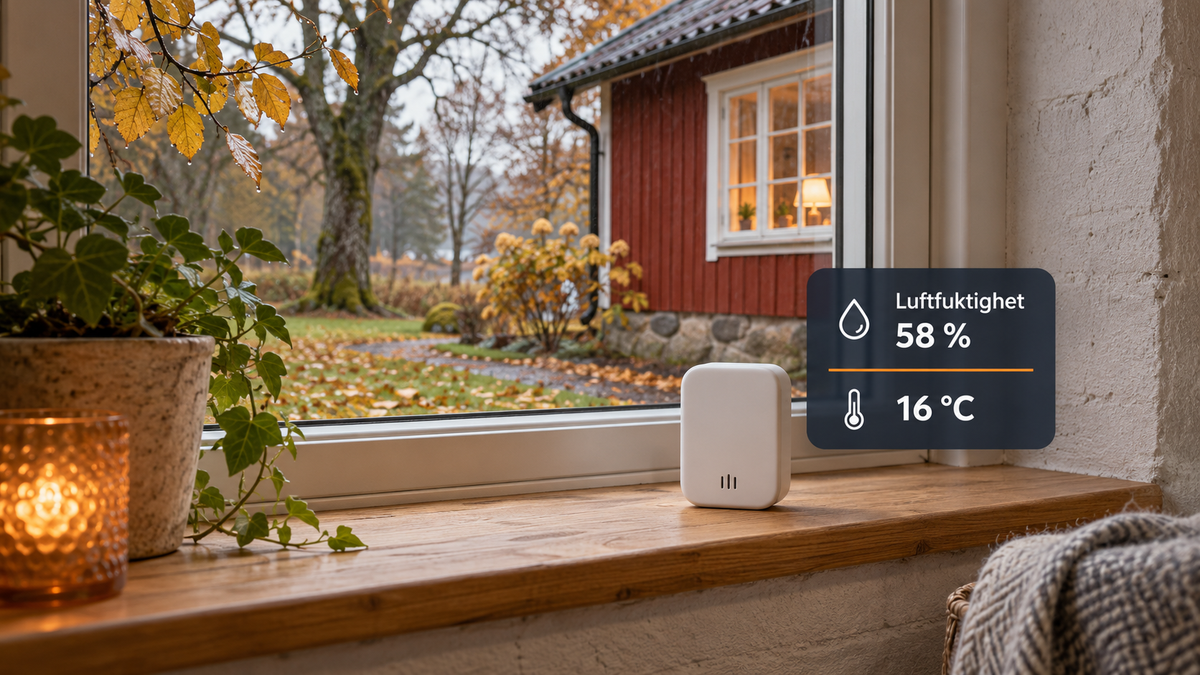
When autumn arrives and temperatures drop, the risk of moisture in the home increases. The basement, attic, crawl space, and holiday home that stands empty this winter are typical places where moisture takes hold, often without anyone noticing until it smells or becomes visible. The good news is that moisture can be measured, and you can do something about it before it becomes a problem.
Why is moisture a problem?
Moisture and mold affect both the house and your health. According to Boverket, moisture and mold damage can lead to allergies, asthma, and other illnesses, and can also be expensive to remedy.
It is also more common than many think. In Boverket's large survey of Swedish buildings, BETSI, 38 percent of small houses had at least one moisture damage that can affect the indoor environment. Cold attics were the part of the house that was most affected, and every fourth crawl space had damage.
This is where moisture is usually found
- Basements and storage rooms. Cold walls and floors against the ground make the air easily damp.
- Crawl spaces and attics. Spaces you rarely visit, where moisture can remain for a long time before anyone notices it.
- Holiday homes and garages. Buildings that are unheated or empty during parts of the year.
This is what you do about it
1. Measure the humidity
The first step is to know how it actually looks. A moisture sensor shows both temperature and relative humidity, and with Telldus you see the values directly in the app, at home or wherever you are. Boverket's rules use 75 percent relative humidity as the critical level for materials where nothing else is known, so it is a good figure to keep an eye on.
2. Review the cause
Sometimes moisture can be stopped at the source. Check that the ventilation works, that downspouts and drainage lead water away from the house, and that there are no leaks. If you are unsure, seek help from someone who knows about moisture.
3. Dehumidify
In many spaces, a dehumidifier is the easiest way to keep moisture down. A compressor dehumidifier is well suited for warmer spaces, while a desiccant dehumidifier works even when it is cold, for example in an unheated basement, crawl space, or a holiday home in winter.
4. Let it take care of itself
Plug the dehumidifier into a smart plug and create an automation in the Telldus app. When the humidity becomes too high, the plug turns on the dehumidifier, and when the moisture is down again, it turns off. You don't have to keep track yourself, and the history in the app shows that the moisture is kept down. Automations require Telldus Premium.
We collaborate with Branova
To make it easy, we have started a collaboration with Branova, a Swedish company in Enköping that has offered solutions in dehumidification, air purification, and humidification since 2016. Branova helps you choose the right dehumidifier for your space.
Until January 31, 2027, you also get a promotional price on two of Branova's desiccant dehumidifiers, Ecor Pro DH800 and DH1200. On our Branova page you will find the offer, the codes, and everything you need from Telldus to get started.